UNFCCC and Beyond: International Environmental Governance in the Age of Climate Crisis - Lecture 14
Posted 8 months ago
4/2026
Climate Change as a Global Environmental Challenge
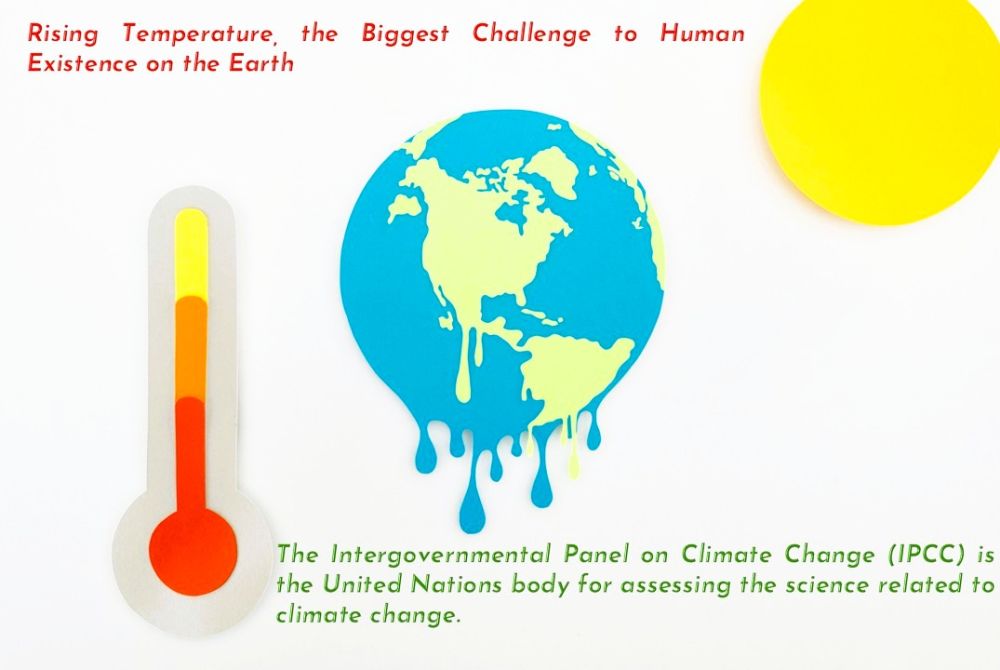
Climate change involves long-term changes in temperature, rainfall patterns, and weather extremes, mainly caused by human activities such as burning fossil fuels, deforestation, and industrial processes. These activities increase greenhouse gases (GHGs) in the atmosphere, especially carbon dioxide, methane, and nitrous oxide. The enhanced greenhouse effect leads to global warming, rising sea levels, glacier melting, extreme weather events, and threats to food security, ecosystems, and human health.
As climate change ignores national boundaries, it cannot be solved by individual countries alone. This understanding led to the formation of a global framework under the United Nations.
United Nations Framework Convention on Climate Change (UNFCCC)
The United Nations Framework Convention on Climate Change (UNFCCC) was adopted at the Earth Summit in Rio de Janeiro in 1992. It serves as the first comprehensive international response to climate change. The Convention does not set binding emission limits but establishes principles, objectives, and mechanisms to guide collective global action.
The main goal of the UNFCCC is to stabilize greenhouse gas levels to prevent dangerous human disruption of the climate system, while allowing ecosystems to adapt naturally, keeping food production secure, and supporting sustainable economic growth. With 197 countries and the European Union as Parties, the UNFCCC has near-universal membership, making it one of the most widely supported environmental agreements in history.
Functions and Role of the UNFCCC
The UNFCCC serves as the main structure of global climate governance. It offers a clear framework for cooperation, dialogue, and policymaking. One of its main roles is to help countries prepare national greenhouse gas inventories and climate action reports, which improve transparency and accountability.
The Convention also encourages countries to adopt mitigation strategies to reduce emissions and implement adaptation measures to address climate impacts. Importantly, it recognizes the different capacities of countries and promotes financial aid, technology transfer, and capacity-building for developing nations. This way, the UNFCCC links environmental protection with development needs.
Principle of Common but Differentiated Responsibilities
A key idea under the UNFCCC is the principle of common but differentiated responsibilities (CBDR). This principle recognizes that while all countries share responsibility for fighting climate change, developed nations have a greater duty because of their historical emissions and stronger economic ability.
CBDR promotes fairness in climate governance by giving developing countries greater flexibility while expecting developed nations to provide leadership, financial aid, and technological support. This principle heavily influenced early climate agreements, such as the Kyoto Protocol.
Conference of the Parties (COP)
The Conference of the Parties (COP) is the top decision-making body of the UNFCCC. It meets every year and brings together representatives from all member states, along with scientists, civil society groups, and international organizations.
COP meetings serve as platforms for assessing progress, reviewing scientific findings, negotiating new agreements, and strengthening existing climate policies. Many of the world’s most critical climate decisions, such as emission targets, climate finance mechanisms, and adaptation strategies, have stemmed from COP negotiations.
Importance and Outcomes of COP Meetings
COP meetings are essential for shaping global climate policy. They allow countries to update their commitments based on new scientific evidence, especially findings from climate science organizations. COPs also address emerging issues such as climate-related loss and damage, climate justice, and the responsibilities of developing nations.
Beyond negotiations, COPs raise global awareness, promote cooperation between governments and non-state actors, and emphasize the urgency of climate action at both national and international levels.
Kyoto Protocol: The First Binding Climate Treaty
The Kyoto Protocol was adopted at the third COP meeting (COP3) in 1997 and came into force in 2005. It represented a key milestone in climate governance by establishing legally binding emission reduction goals for developed countries.
Under the Kyoto Protocol, industrialized nations agreed to cut their emissions by about 5% below 1990 levels during the first commitment period (2008–2012). The Protocol mainly applied the principle of CBDR by placing obligations on developed countries.
The Kyoto Protocol established robust systems for monitoring, reporting, and verification, enhancing transparency in climate efforts. It also created the Adaptation Fund, which helps vulnerable developing countries manage climate risks.
However, the Protocol faced limitations. Major emitters did not fully participate or withdrew, and developing countries had no binding targets. These weaknesses reduced their overall effectiveness, highlighting the need for a more inclusive global agreement.
Paris Agreement: A New Global Climate Approach
The Paris Agreement, adopted in 2015 at COP21, establishes a more adaptable and inclusive climate framework. Unlike the Kyoto Protocol, it applies to all countries, regardless of their level of development.
The Paris Agreement established nationally determined contributions (NDCs), enabling countries to set climate goals in line with their capabilities while supporting a shared global effort. This method promotes wider participation and sustained commitment.
The main goal of the Paris Agreement is to keep the increase in global average temperature well below 2°C, ideally limiting it to 1.5°C above pre-industrial levels. Scientific evidence shows that exceeding these thresholds would significantly raise the frequency and severity of extreme weather events, threaten ecosystems, and worsen socio-economic inequalities.
The Agreement also emphasizes adaptation, climate finance, and support for vulnerable nations, linking climate action with sustainable development.
Contemporary Challenges in Global Climate Action
Although progress has been made, global climate governance still faces serious challenges. Political divisions, ongoing reliance on fossil fuels, insufficient climate finance, and slow progress in implementing commitments block effective action. Scientific assessments warn that the window to prevent severe climate impacts is rapidly closing.
Developing countries continue to call for climate justice, highlighting the need for greater financial and technological support. Delays in action raise the risks of food insecurity, economic loss, displacement, and environmental damage.
The UNFCCC, Kyoto Protocol, and Paris Agreement together form the evolving framework of global climate governance. Understanding these structures is essential to seeing how science, politics, economics, and ethics come together to address one of the most urgent environmental challenges of our time.
Q1. What is the United Nations Framework Convention on Climate Change (UNFCCC)? Explain its significance in global environmental governance.
Answer:
The United Nations Framework Convention on Climate Change (UNFCCC) is an international environmental treaty adopted in 1992 to combat climate change. It sets out the fundamental rules, principles, and organizational structure through which countries work together to reduce greenhouse gas emissions and adapt to climate impacts. Its importance lies in its nearly universal membership, making climate change a shared global responsibility rather than an isolated national issue. The UNFCCC laid the groundwork for subsequent climate agreements and continues to guide international climate efforts.
Q2. Discuss the main objectives and functions of the UNFCCC.
Answer:
The main goal of the UNFCCC is to stabilize greenhouse gas levels in the atmosphere to prevent dangerous human interference with the climate system. Its roles include providing a global framework for climate action, guiding international cooperation, promoting emission reductions, and requiring countries to report their emissions and mitigation efforts regularly. The Convention also supports developing countries through climate finance, technology transfer, and capacity-building to help them address climate impacts.
Q3. What is the Conference of the Parties (COP)? Describe its role in climate governance.
Answer:
The Conference of the Parties (COP) is the top decision-making body of the UNFCCC. It is an annual gathering where all member countries evaluate their progress in tackling climate change, negotiate new agreements, and strengthen existing rules. COP meetings enable countries to collectively review scientific evidence, update their climate commitments, and make decisions on mitigation, adaptation, climate finance, and loss and damage.
COP meetings are essential because they provide a platform for global dialogue and decision-making on climate change. They help review national and global progress, negotiate landmark agreements such as the Paris Agreement, and mobilize financial resources for developing countries. COPs also ensure that climate policies evolve in response to emerging scientific evidence and increasing climate risks.
Q4. Describe the Kyoto Protocol, including its objectives and legal importance.
Answer:
The Kyoto Protocol was adopted in 1997 and came into force in 2005. It was the first legally binding international treaty under the UNFCCC requiring developed countries to cut their greenhouse gas emissions. The Protocol targeted an average reduction of about 5% below 1990 levels during 2008–2012. Its legal significance lies in turning climate commitments from voluntary to enforceable obligations.
The Kyoto Protocol established a strong system for monitoring, reporting, and compliance, boosting accountability among developed countries. It also created the Adaptation Fund to aid developing nations. However, its limitations included excluding developing countries from binding targets and the withdrawal or non-participation of some major emitters, which lessened their overall ability to cut global emissions.
Q5. What is the Paris Agreement, and how does it differ from the Kyoto Protocol?
Answer:
The Paris Agreement is a legally binding international climate treaty adopted in 2015. Unlike the Kyoto Protocol, it applies to all countries, developed and developing alike. Instead of fixed targets, it depends on nationally determined contributions (NDCs), allowing countries to set their own climate goals while collectively working to limit global warming.
The Paris Agreement aims to keep the global temperature rising well below 2°C above pre-industrial levels, with efforts to limit it to 1.5°C. These targets are vital because even small temperature increases significantly increase the risk of extreme weather events, sea-level rise, food insecurity, biodiversity loss, and economic damage, especially for vulnerable regions.
Q6. Discuss the current challenges facing global climate negotiations, particularly in the context of recent COP meetings.
Answer:
Global climate negotiations face several challenges, including political divisions among countries, continued reliance on fossil fuels, and a widening gap between climate commitments and real-world action. Scientific warnings indicate that the time to avoid severe climate impacts is rapidly shrinking. Developing countries continue to demand stronger climate finance, technology transfer, and support, while delays in action increase the risks of extreme weather events, economic losses, and humanitarian crises.