How China Came to Rule the World of Solar Power?
Posted 9 months ago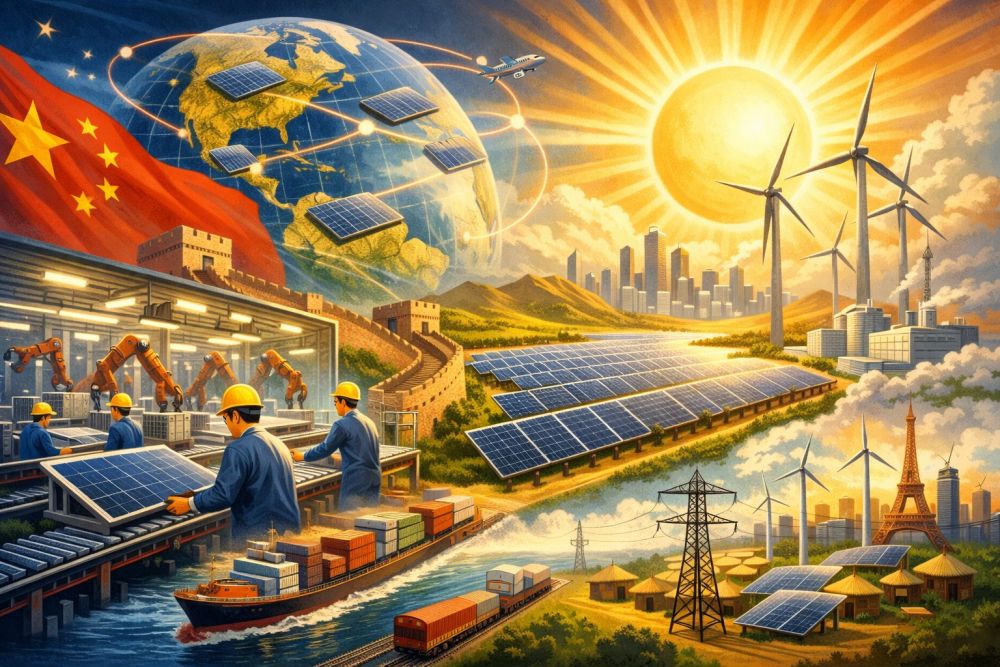
80/25
By building solar panels faster, cheaper, and on a scale no one else could match, China quietly turned clean energy from a green dream into an everyday reality, changing how the world powers its homes, cities, and future. The Journal Science declared it as Breakthrough of the Year 2025.
Over the past decade and a half, China has quietly become the factory floor of the global clean-energy revolution, producing about 80 percent of the world’s solar cells, which underscores its critical role in shaping the future of renewable energy worldwide.
This did not happen overnight. Nor was it an accident.
Years ago, while many governments debated renewable energy's viability, China made a strategic long-term bet by pouring state subsidies into solar manufacturing, helping companies build massive factories, and encouraging tough competition among domestic producers, which led to sustained cost reductions.
The results reshaped the global energy market. Solar panels that once cost a fortune became affordable almost everywhere. Prices dropped so sharply that in many countries, solar power is now cheaper than building new coal or gas plants. Villages without electricity, warehouses, schools, and even massive data centers are now running on panels made mainly in China.
This dominance has created unease in other capitals. Officials in Washington and Brussels worry about relying so heavily on one country for such a critical technology. While they are trying to rebuild local industries, the global effort to diversify and cooperate underscores the importance of shared responsibility in addressing climate change.
There is also a striking contradiction at the heart of this story. China remains the world’s largest emitter of greenhouse gases. Yet it is also the world’s biggest installer of renewable energy, showing that progress is possible even amid challenges. Vast solar farms and city rooftops covered in panels reflect China's commitment to transforming its power system.
For the planet, the impact has been enormous. Climate experts widely agree that without China’s manufacturing push, the world would be far behind in the race to cut carbon emissions. Solar power might still be a luxury instead of a workhorse.
The lesson is a simple one, though not always comfortable: big problems often require big industrial solutions. China's ability to build solar energy at scale, quickly, and affordably demonstrates how industrial capacity can effectively address global challenges.
As countries scramble to meet climate targets and keep the lights on, the sun has become one of humanity’s strongest allies. And for now, much of that sunlight reaches the world through factories thousands of miles away, humming day and night in China.