Earth’s Atmosphere: Structure, Functions, and the Greenhouse Balance -Lecture 10
Posted 8 months ago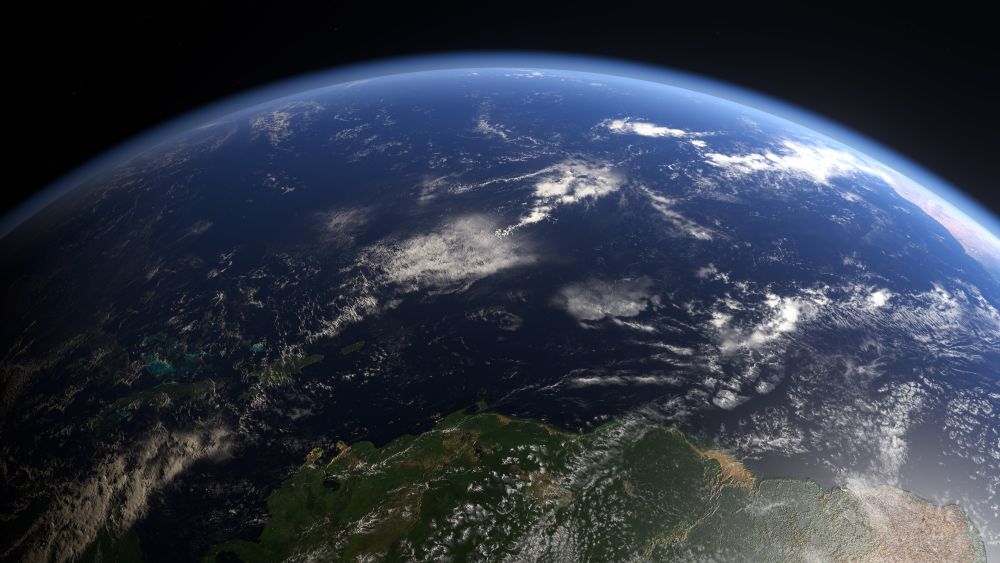
8/2026
The Earth is surrounded by a delicate, yet powerful layer of gases called the atmosphere. Although nearly invisible, this thin layer is essential for supporting life, regulating the climate, and maintaining environmental stability. Held in place by gravity, the atmosphere mainly consists of nitrogen (78%) and oxygen (21%), along with smaller but vital amounts of argon, carbon dioxide, water vapor, and ozone. These gases work together to form a dynamic system that sustains biological processes, shields life from harmful radiation, and helps control the Earth’s temperature.
One of the key roles of the atmosphere is temperature control. Each day, the Sun sends a large amount of energy to Earth through solar radiation. This energy must pass through several layers of the atmosphere before reaching the surface. During this process, some radiation is reflected into space, atmospheric gases absorb some, and the rest heats the land and oceans. Without this filtering system, Earth would experience extreme temperature fluctuations, making it uninhabitable.
Beyond regulating the climate, the atmosphere protects life by absorbing harmful ultraviolet (UV) radiation. This vital function, primarily carried out by ozone molecules, should remind us of the importance of safeguarding this protective shield for our health and ecosystems.
The Layered Structure of the Atmosphere
The atmosphere is not uniform; rather, it is divided into distinct layers based on temperature trends and physical processes. Appreciating this layered structure can motivate students and scientists to explore how each layer uniquely influences our environment and climate.
The troposphere, extending from the Earth’s surface to about 12 kilometers above, is where humans live and all weather occurs. This layer contains nearly 80–90% of the atmosphere's mass. Temperature decreases with altitude in the troposphere because air pressure decreases with increasing altitude, causing air to expand and cool as it rises. Clouds, rainfall, storms, and daily weather changes are all confined to this lowest layer, making it the most directly relevant to human life.
Above the troposphere is the stratosphere, which extends from about 12 to 50 kilometers above Earth. Unlike the troposphere, temperature in the stratosphere increases as you go higher. This temperature rise occurs because the ozone layer absorbs ultraviolet radiation from the Sun and converts it into heat. The stratosphere plays a key protective role by blocking excessive UV radiation from reaching Earth’s surface, helping to shield DNA, ecosystems, and human health.
The mesosphere, which extends from 50 to 85 kilometers above Earth's surface, is the coldest layer of the atmosphere, with temperatures dropping to as low as –90°C. Despite its freezing conditions, the mesosphere plays an important protective role: it burns up most meteors entering Earth’s atmosphere because of friction, preventing them from hitting the surface.
Above the mesosphere lies the thermosphere, an extremely thin but high-energy layer extending from about 85 kilometers to several hundred kilometers into space. Temperatures here can exceed 1,800°C due to the absorption of high-energy X-rays and ultraviolet radiation.This layer includes the ionosphere, which enables long-distance radio communication, and is where many low-Earth-orbit satellites, including the International Space Station, operate.
Solar Energy and the Greenhouse Effect
Each morning, as sunlight reaches Earth, an interesting energy exchange begins. Solar radiation passes through the atmosphere and warms the planet’s surface. Land and water absorb much of this energy and later release it back into the atmosphere as infrared (IR) radiation, or heat.
Some of this outgoing heat escapes into space, but a significant amount is absorbed by greenhouse gases such as carbon dioxide (CO₂), methane (CH₄), water vapor (H₂O), and nitrous oxide (N₂O). These gases re-emit heat in all directions, including back toward the Earth’s surface. This natural process, called the greenhouse effect, acts like a thermal blanket, keeping the planet warm enough to support life.
The greenhouse effect is vital. Without it, Earth’s average temperature would be much lower, likely below freezing. However, human activities such as burning fossil fuels, industrial processes, intensive farming, deforestation, and transportation have greatly increased greenhouse gas levels. This boost of the natural greenhouse effect has caused global warming, climate change, and widespread environmental impacts.
Thus, the atmosphere functions both as a life-support system and a delicate regulator, carefully balanced between natural processes and human activity. Understanding its structure and operation is crucial for tackling modern environmental challenges and securing a sustainable future.
Question 1
Define the Earth’s atmosphere and describe its origin, composition, and overall significance for supporting life on Earth.
Answer:
The Earth’s atmosphere is a multilayered shell of gases surrounding the planet, held in place by gravity. It’s not just a passive blanket of air but a dynamic, life-supporting system that has developed over billions of years. The early atmosphere was created by volcanic outgassing, which released gases such as water vapor, carbon dioxide, nitrogen, and ammonia. Over geological time, biological processes, especially photosynthesis by early cyanobacteria, significantly altered atmospheric composition by producing free oxygen, leading to the oxygen-rich atmosphere we rely on today.
Modern atmospheric composition is mainly nitrogen (about 78%), which acts as a stabilizing gas, preventing rapid combustion and controlling chemical reactions. Oxygen (around 21%) is vital for aerobic respiration and energy production in complex organisms. The remaining components include argon, carbon dioxide, water vapor, ozone, and trace gases, each playing a significant role in climate regulation and biological processes.
The atmosphere is vital for life for several reasons. It provides oxygen for breathing and carbon dioxide for photosynthesis, controls surface temperature through the greenhouse effect, protects organisms from harmful ultraviolet and cosmic radiation, and supports the water cycle. Without the atmosphere, Earth would look like the Moon—experiencing extreme temperature changes and lacking the conditions needed for life. Therefore, the atmosphere is a carefully balanced life-support system essential to planetary habitability.
Question 2
Discuss the major atmospheric gases and critically evaluate their ecological and climatic significance.
Answer:
Each major atmospheric gas uniquely contributes to Earth’s environmental stability. Nitrogen, although mostly inert, plays an essential role in the nitrogen cycle, supporting plant growth and food webs. Through biological nitrogen fixation, it becomes accessible for protein and DNA synthesis in living organisms.
Oxygen is essential for cellular respiration, helping organisms release energy stored in food molecules. Its presence also contributed to the evolution of complex multicellular life. However, because oxygen is chemically reactive, nitrogen’s diluting effect is crucial for maintaining atmospheric stability.
Carbon dioxide, though found in small amounts, is one of the most important climate-regulating gases. It absorbs infrared radiation, helping keep Earth’s temperature stable. Public-domain climate research has shown that even small increases in CO₂ levels can significantly impact global temperature trends.
Water vapor the most abundant greenhouse gas and plays a key role in weather and climate feedback mechanisms. Ozone, found in the stratosphere, absorbs ultraviolet radiation and helps protect living organisms from genetic damage. Together, these gases show how atmospheric composition directly influences ecological balance, climate stability, and evolutionary potential.
Question 3
Explain the layered structure of the atmosphere and describe why temperature trends differ across layers.
Answer:
The Earth’s atmosphere is divided into layers based on temperature changes with altitude, which indicate variations in energy absorption. The temperature of the troposphere decreases as altitude rises because it is heated from below by Earth’s surface. As air rises, it expands due to lower pressure and cools, a fundamental principle of atmospheric physics.
In contrast, the stratosphere shows rising temperatures with increasing altitude due to the absorption of ultraviolet radiation by ozone molecules. This temperature inversion creates atmospheric stability, limiting vertical mixing and protecting the ozone layer.
The mesosphere again shows decreasing temperatures with increasing altitude because it lacks significant mechanisms for absorbing solar energy. The thermosphere reverses this trend, becoming very hot as it absorbs high-energy solar radiation from the sparse gases. These alternating temperature gradients illustrate how solar radiation, gas density, and chemical composition interact to shape atmospheric structure.
Question 4
Why is the troposphere viewed as the most environmentally important layer of the atmosphere for humans?
Answer:
The troposphere is essential for the environment because it directly supports human life and ecosystems. It contains most of the atmospheric mass, nearly all the water vapor, and the majority of greenhouse gases. All weather events, such as cloud formation, rainfall, storms, and wind circulation, occur within this layer.
Human activities such as agriculture, transportation, industry, and urbanization primarily affect the troposphere, contributing to air pollution and climate change. Tropospheric processes control surface temperature, freshwater resources, and ecosystem productivity. Any disturbance in this layer, such as higher greenhouse gas levels or particulate pollution, has immediate and widespread effects on human health and environmental sustainability.
Question 5
Describe the stratosphere and discuss the environmental significance of the ozone layer.
Answer:
The stratosphere is a relatively stable layer of the atmosphere that extends from about 12 to 50 kilometers above Earth’s surface. Its key characteristic is the ozone layer, which absorbs most of the Sun’s harmful ultraviolet radiation. This absorption not only shields living organisms from DNA damage but also raises the temperature in the upper stratosphere, creating a temperature inversion.
Public-domain scientific research has shown that ozone layer depletion increases the risk of skin cancer, cataracts, crop damage, and disruption of marine food chains. International agreements like the Montreal Protocol have demonstrated that coordinated global efforts can successfully restore atmospheric systems, making ozone protection a major achievement in environmental governance.
Question 6
Why is the mesosphere considered both extreme and protective in nature?
Answer:
The mesosphere is extreme because it is the coldest atmospheric layer, with temperatures dropping to around –90°C. Despite this harsh environment, it plays a vital protective role by burning up meteoroids before they reach Earth’s surface. The friction generated as meteors pass through this layer causes them to disintegrate, preventing frequent and potentially catastrophic impacts.
Thus, although the mesosphere is inhospitable to life, it plays an essential role in planetary safety and long-term habitability.
Question 7
Explain the thermosphere and its significance for modern technology and communication.
Answer:
The thermosphere experiences very high temperatures due to absorption of high-energy solar radiation. It includes the ionosphere, a region full of charged particles that reflect radio waves, allowing for long-distance radio communication.
Many satellites, including those used for navigation, climate monitoring, and communication, orbit within this layer. The thermosphere thus serves as a vital boundary between Earth’s atmosphere and space-based technologies that support modern society.
Question 8
Describe how solar energy interacts with the Earth's atmosphere system from arrival to re-emission.
Answer:
Solar energy reaches Earth as shortwave radiation. Some is reflected into space by clouds and atmospheric particles, while the rest hits the surface and is absorbed by land and water. This absorbed energy heats the surface, which then emits energy back as long-wave infrared radiation.
This outgoing heat interacts with atmospheric gases, influencing Earth’s energy balance. The process helps prevent Earth from overheating during the day or losing too much heat at night, ensuring climatic stability.
Question 9
Explain the greenhouse effect and distinguish between its natural and enhanced forms.
Answer:
The greenhouse effect is a natural process whereby greenhouse gases trap heat in the lower atmosphere, keeping Earth warm enough to support life. Without it, Earth’s average temperature would be far below freezing.
The enhanced greenhouse effect occurs when human activities increase greenhouse gas concentrations beyond natural levels. Fossil fuel combustion, deforestation, and industrial agriculture intensify heat retention, leading to global warming, altered weather patterns, and climate instability.
Question 10
Why is understanding atmospheric science essential for addressing contemporary environmental challenges?
Answer:
Atmospheric science provides the foundation for understanding climate change, air pollution, ozone depletion, and extreme weather events. Public-domain scientific assessments have shown that informed atmospheric knowledge enables effective policymaking, disaster preparedness, and sustainable development planning.
In an era of accelerating environmental change, understanding atmospheric processes is essential not only for scientists but also for policymakers, educators, and citizens seeking to safeguard planetary health and human well-being.