University of Southern Punjab Partners with WWF-Pakistan to Establish Miyawaki Forest
Posted 1 day ago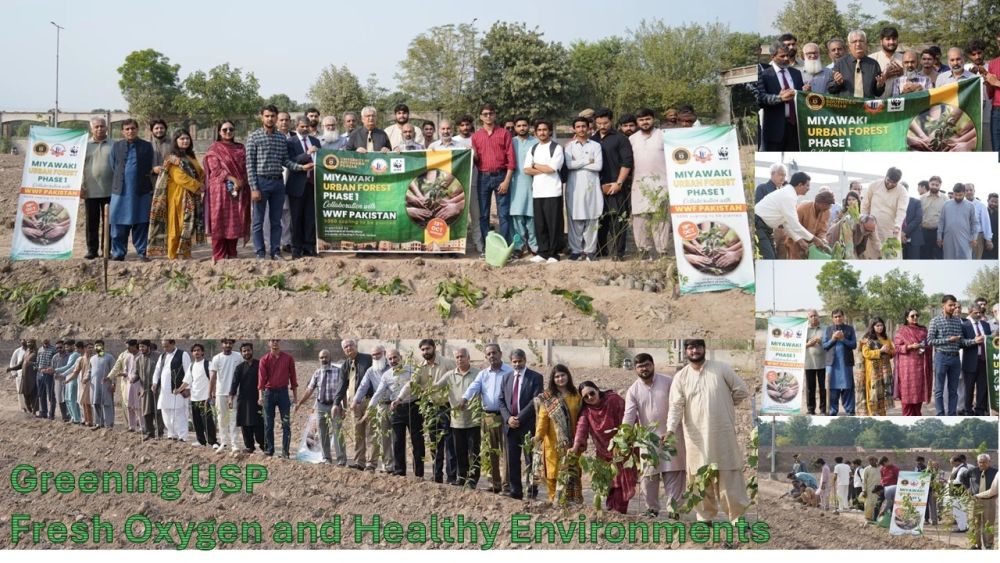
48/2026
The University of Southern Punjab (USP), Multan, Pakistan, has taken a pioneering step towards urban forest restoration by partnering with the World Wide Fund for Nature (WWF-Pakistan) to establish a Miyawaki forest on its campus. The initiative underscores USP’s commitment to climate action, biodiversity conservation, and sustainable campus development.
Through this collaboration, WWF-Pakistan will provide 5,000 indigenous saplings at no cost, while USP will arrange the planting site, workforce, protection, and ongoing maintenance. The agreement also includes replenishment if the sapling survival rate falls below 70%, reflecting a shared commitment to the plantation’s long-term success.
The Miyawaki method involves densely planting diverse, locally appropriate species to create multilayered vegetation in relatively small spaces. When properly designed and maintained, these forests can provide wildlife habitat, improve soil conditions, and create shaded, cooler microclimates. The initiative is particularly relevant to Multan and Southern Punjab, where extreme summer temperatures and water scarcity make sustainable urban greening increasingly important.
Mr. Asim Nazir Ahmad, Chairman of the Board of Governors of USP, praised WWF-Pakistan’s collaboration and commended the university’s efforts to translate environmental responsibility into practical action. He emphasized that universities must lead by example in promoting sustainability and fostering environmental awareness among young people. He expressed confidence that the initiative would inspire other educational institutions to contribute to a greener Pakistan.
Professor Emeritus Dr. Muhammad Mukhtar, Rector of USP, thanked WWF-Pakistan for providing 5,000 indigenous saplings and supporting this important environmental initiative. He highlighted universities' responsibility to integrate sustainability into campus development, research, teaching, and community engagement.
Professor Mukhtar emphasized that plantation projects' success must be measured by tree survival and healthy growth, not simply the number planted. He reaffirmed USP’s commitment to properly caring for and maintaining the Miyawaki forest and expressed hope that the project would serve as a model for environmental action across Southern Punjab.
The initiative will also provide opportunities for students and faculty to engage in biodiversity conservation, climate education, and environmental monitoring, turning the campus forest into a living learning resource.
Through this partnership, USP and WWF-Pakistan are demonstrating how collaboration between higher education and conservation organizations can advance practical environmental solutions.