How to Keep the World Cool Without Heating the Planet?
Posted 1 month ago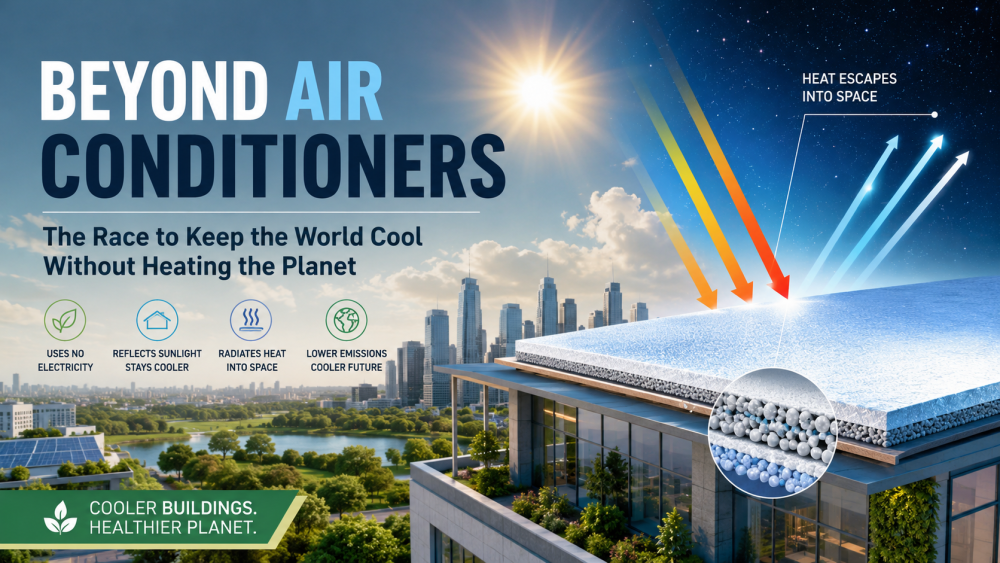
33/2026
Scientists are developing remarkable new materials that can cool homes and cities naturally, offering hope as climate change pushes temperatures to dangerous new extremes.
As record-breaking heat waves sweep across continents, millions of people instinctively reach for the thermostat. Air conditioning has become one of humanity's most effective defenses against extreme heat, saving countless lives every year. But scientists warn that our growing dependence on air conditioners may be creating a new climate paradox: the very technology that keeps us comfortable is also making cities hotter, consuming enormous amounts of electricity, and adding greenhouse gas emissions.
Now, researchers believe the future of cooling may not lie in bigger air conditioners, but in smarter buildings.
The Air Conditioning Dilemma
It is believed that cooling buildings already account for nearly 10% of global electricity consumption, and demand is rising rapidly as the planet warms up. Experts estimate that by 2050, the electricity required for cooling could increase by more than 200%, while emissions associated with air conditioning may triple if current trends continue.
Ironically, air conditioners solve one problem while creating another.
Every air conditioner removes heat from inside a building and releases it outdoors. In densely populated cities, where thousands or even millions of units operate simultaneously, this expelled heat raises outdoor temperatures, encouraging even greater use of air conditioning. Scientists describe this as a self-reinforcing cycle, a feedback loop that makes urban environments progressively hotter, underscoring the need for passive cooling innovations to break this cycle and keep readers focused on solutions.
Cooling Without Electricity
Instead of fighting heat with more energy, scientists are exploring passive cooling technologies that naturally keep buildings cooler with little or no electricity, emphasizing their role in sustainable design to keep readers engaged with eco-friendly solutions.
Some solutions are surprisingly simple. Automated blinds, adjustable window shades, and architectural designs that block direct sunlight can significantly reduce indoor temperatures before heat even enters a building.
But the most exciting innovations come from advanced materials engineered at microscopic scales, sparking curiosity about future possibilities.
Paint That Sends Heat Into Space
One of the most promising breakthroughs is known as passive radiative cooling.
Scientists have developed special paints, coatings, glasses, and building materials that maximize natural heat escape through the atmospheric window, a breakthrough in passive radiative cooling that can inspire readers about innovative sustainable solutions that require no electricity.
Some experimental coatings contain microscopic particles of silicon oxide and aluminum oxide that scatter sunlight while efficiently releasing heat. In laboratory and outdoor tests, these coatings have reflected up to 97% of incoming solar energy, reducing surface temperatures by more than 5°C compared with conventional materials.
Imagine rooftops, walls, and windows that quietly cool themselves throughout the day, requiring no fans, compressors, or electrical power.
Smarter Buildings for a Hotter World
Researchers are also designing multilayer materials filled with microscopic air pockets that act as highly efficient thermal shields. These lightweight structures reduce the amount of heat entering buildings while simultaneously helping internal heat escape.
Future buildings may combine these technologies with intelligent architecture, green roofs, reflective surfaces, natural ventilation, and adaptive window systems to dramatically reduce the need for conventional air conditioning.
Instead of constantly cooling overheated buildings, engineers aim to prevent buildings from heating up in the first place.
Cooling People Not Just Buildings
Scientists emphasize that air conditioning will remain essential, especially for hospitals, elderly individuals, and people living in regions experiencing extreme heat. The goal is not to replace air conditioning entirely but to reduce our dependence on it through smarter design and advanced materials.
Every degree of passive cooling lowers electricity demand, eases pressure on power grids, reduces greenhouse gas emissions, and helps communities become more resilient during heat waves, encouraging collective action.
A Cooler Future Through Innovation
Climate change is transforming heat from an occasional inconvenience into one of the world's fastest-growing public health threats. Meeting this challenge will require more than simply installing additional air conditioners.
The next generation of cooling technologies may be nearly invisible: reflective paints that radiate heat into space, windows that intelligently manage sunlight, roofs that stay naturally cool, and buildings engineered to work with nature rather than against it.
In the coming decades, the coolest buildings may not be those with the largest air conditioners but those designed so intelligently that they barely need them at all.