Future of Recycling Begins in Our Kitchens
Posted 3 months ago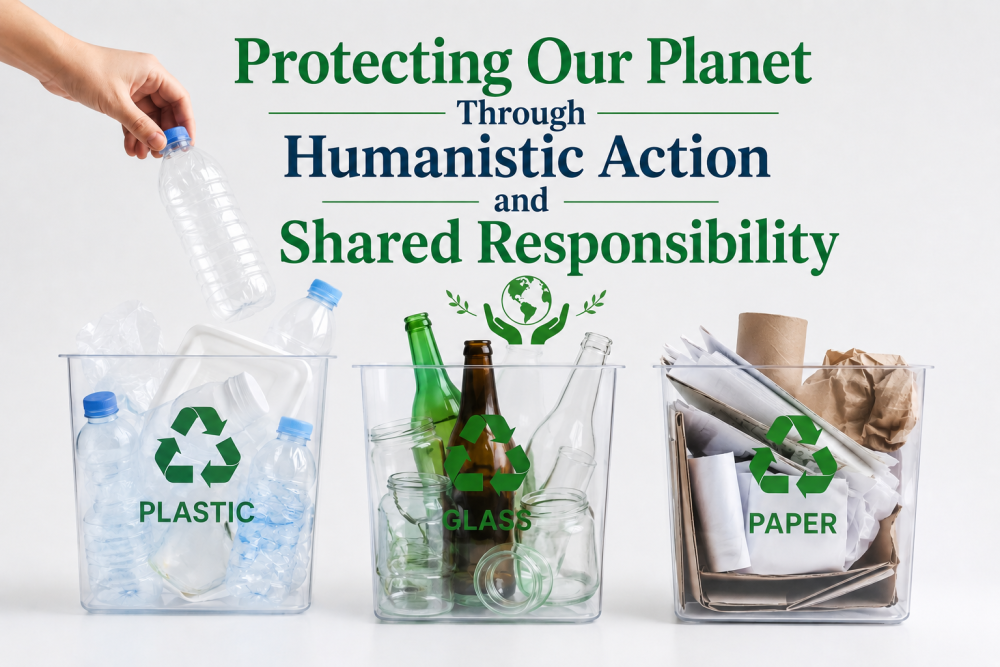
25/2026
According to an article published in the scientific journal Nature, the simple act of sorting household waste may be one of the most effective tools for tackling the world's growing plastic pollution crisis.
Every year, humanity produces more than 400 million tons of plastic. Yet less than 10 percent of that mountain of waste is recycled. The rest ends up in landfills, incinerators, rivers, oceans, and countless corners of the environment, where it can persist for centuries. As governments struggle to negotiate global solutions to plastic pollution, new research suggests that one of the most effective answers may already be in our homes: separating waste before it leaves the kitchen.
A Small Habit with a Big Impact
Most people think recycling begins at a recycling plant. In reality, it often starts much earlier when someone decides whether to put a plastic bottle in a recycling bin or throw it in the trash.
A recent study in the Netherlands compared two recycling approaches. In one system, households separate plastic waste before collection, whereas in the other, all waste is collected together and sorted later by sophisticated recycling facilities equipped with advanced technology. Researchers wanted to determine which method produced cleaner, more recyclable plastic.
The answer was surprisingly clear.
Even the least clean plastic sorted by households was generally cleaner than the best plastic recovered by recycling plants from mixed waste streams. Once different materials are mixed, contamination is difficult and expensive to remove. Food residue, batteries, electronic components, and other unwanted materials often contaminate recyclable plastics.
Why Clean Plastic Matters
Recycling is not simply about collecting plastic; it is about recovering materials that can be turned into new products.
When plastic is contaminated with metals, chemicals, food waste, or non-plastic items, its value drops sharply. Some contaminated waste streams may even contain hazardous substances such as lead or cadmium. In these cases, recycling becomes more difficult, more expensive, and sometimes impossible.
Clean plastic, on the other hand, can be processed more efficiently and converted into useful products, reducing the need to produce new plastic from fossil fuels.
In essence, every correctly sorted bottle, container, or package helps improve the quality of the recycling stream.
Lessons from Countries That Recycle Well
Several European countries have shown that household participation can make a remarkable difference.
Nations such as the Netherlands, Belgium, and Germany have achieved plastic recycling rates exceeding 50 percent. A common feature of these countries is that households receive clear instructions on how to separate recyclable materials before collection. Citizens know what belongs in each bin, and the system is designed to be simple and convenient.
In contrast, countries that rely heavily on collecting mixed waste and sorting it later often recycle a much smaller share of their plastic waste. Recycling rates in such systems may hover around 15 percent.
The message is straightforward: when people participate directly, recycling works better.
The Human Side of Recycling
Technology alone cannot solve the plastic problem.
Researchers emphasize that recycling is ultimately a matter of human behavior. People recycle for many reasons. Some are motivated by environmental concerns, while others do it because it is socially expected or simply because it has become a habit.
What matters most is whether the system feels fair and is easy to use.
When recycling programs are confusing, inconvenient, or overly complicated, participation declines. However, when communities provide clear guidance and practical support, people are far more willing to cooperate.
The study highlights an important lesson for policymakers: successful recycling systems must be designed not only for efficiency but also with human behavior in mind.
Beyond Recycling: Reducing Waste Altogether
Although recycling is essential, it is not the complete solution.
The most sustainable waste is the waste that is never produced in the first place. Reducing unnecessary packaging, reusing materials, repairing products, and choosing durable goods are equally important strategies. Recycling should be viewed as one component of a broader effort to create a circular economy in which materials remain in use for as long as possible.
Controlling Pollution through Humanistic Approaches - A Shared Responsibility
Plastic pollution is often portrayed as a challenge that requires massive international agreements, advanced technologies, and industrial reforms. These measures are certainly important. Yet the new findings remind us that meaningful change can also begin with everyday actions.
The future of recycling may depend as much on household decisions as on high-tech sorting machines. Every item placed in the right bin helps create cleaner recycling streams, lowers environmental costs, and builds a more sustainable future.
The world's plastic crisis can feel overwhelming. Yet sometimes the path to solving a global problem begins with a simple choice at home, one bottle, one container, and one recycling bin at a time.